

In 2024, during my Portrait Photo Camp in Avers, I photographed Olivia in a place where the landscape does not simply become a background. It becomes a presence. Avers has this rare quietness where every gesture feels more visible, every breath more physical, every look more honest. You cannot hide much in such surroundings. The mountains hold you, the wind interrupts you, the light changes your intentions before you have fully formed them.
With Olivia, the work moved naturally between portrait, fashion and a more intimate visual language. Nothing felt forced. The strength of the series lies in this openness. It does not stay in one mood. It shifts from stillness to movement, from softness to tension, from closeness to distance. That variety became the emotional rhythm of the editorial.
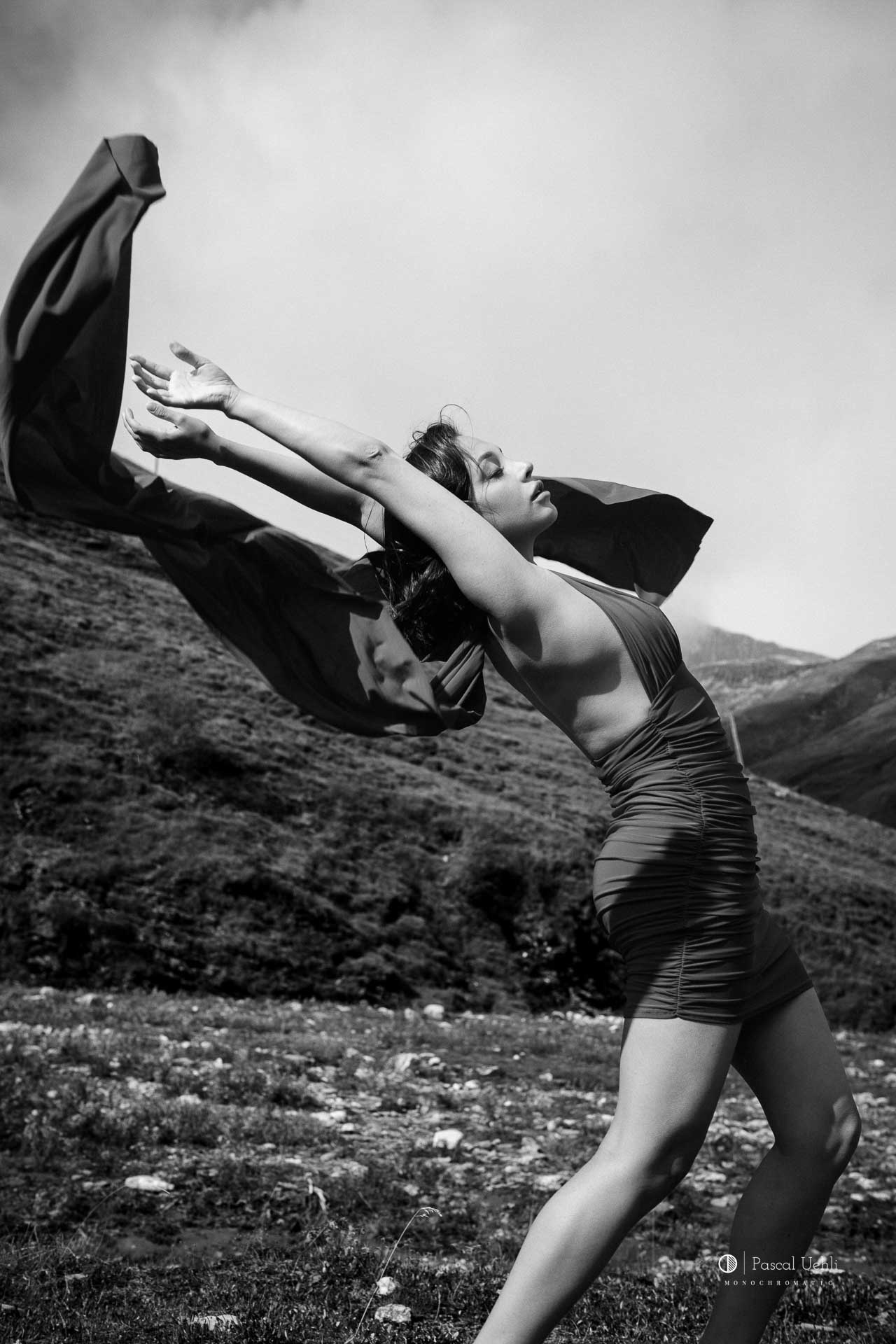
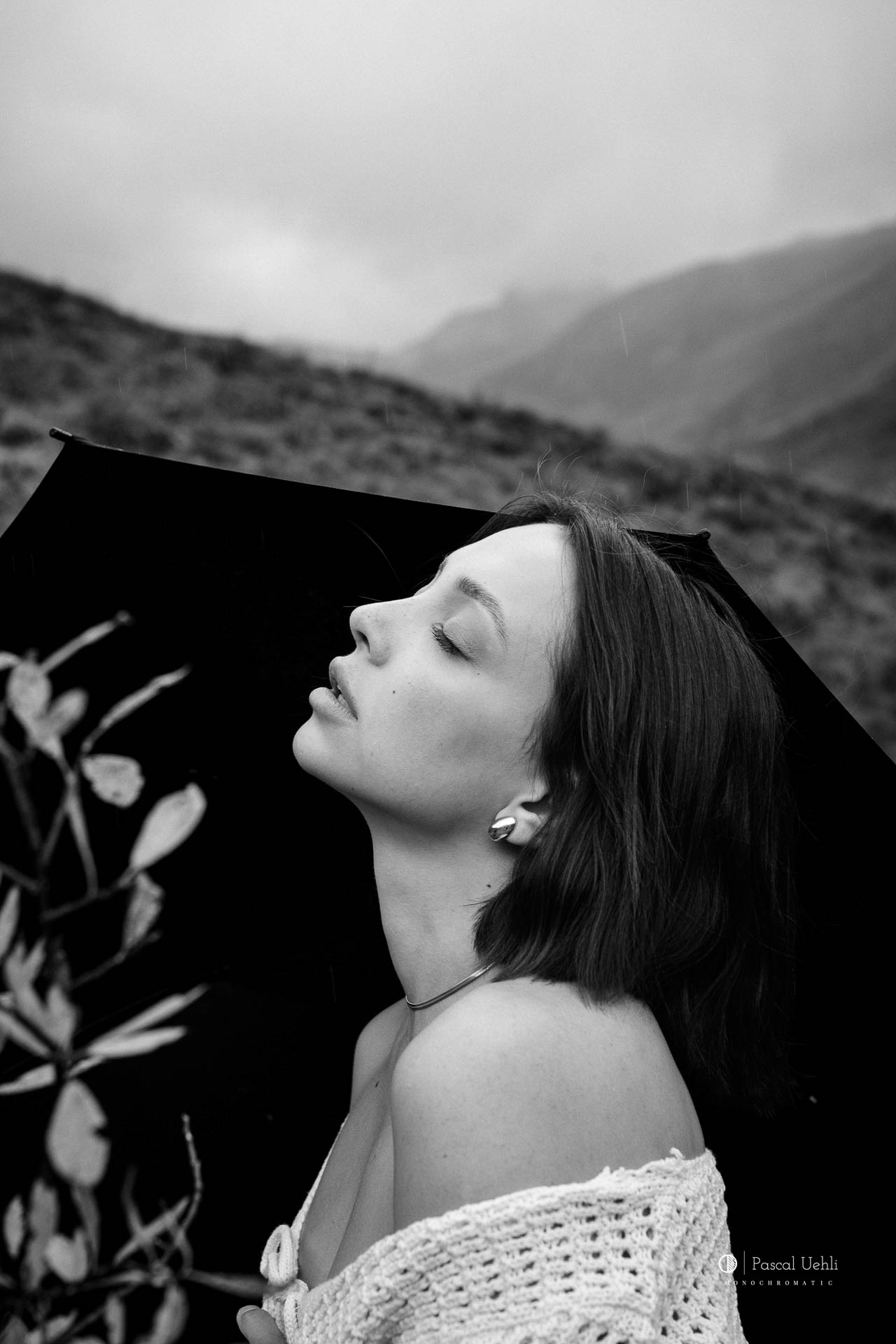
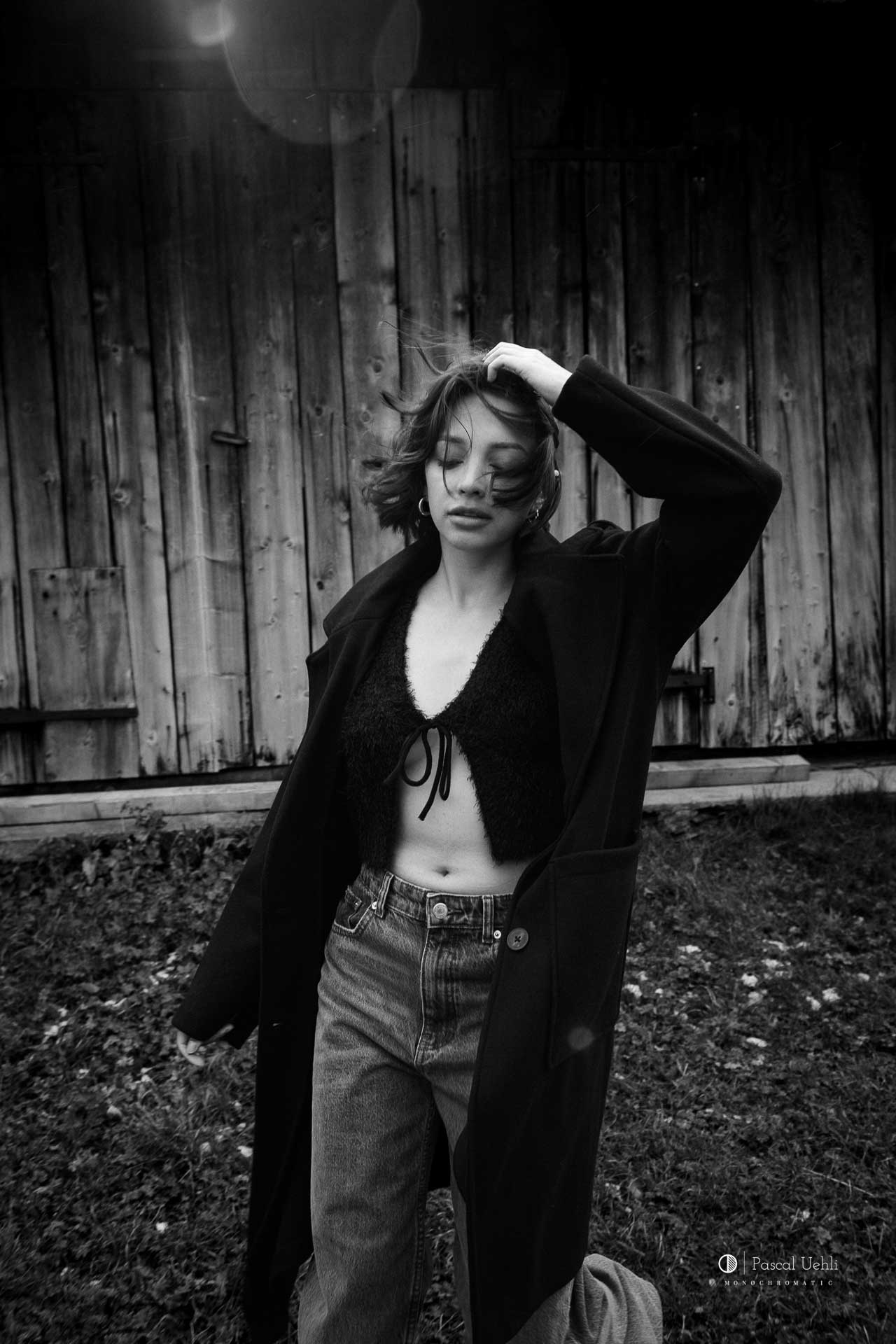
Nude fashion interests me when it is not used as provocation, but as reduction. It is not about showing more. It is about removing what is unnecessary until presence becomes clear. In this series, skin, fabric and landscape enter into a quiet dialogue. The body is not treated as an object, but as form, vulnerability and attitude.
The styling carries this balance. Knitwear, dark textures, open silhouettes and moving fabric create moments where fashion becomes less decorative and more emotional. You feel the contrast between protection and exposure. You see how a garment can reveal without becoming loud, and how nudity can remain subtle, elegant and deeply human.
Presence is not the absence of movement; it is the moment when everything moving finally belongs to the same breath.
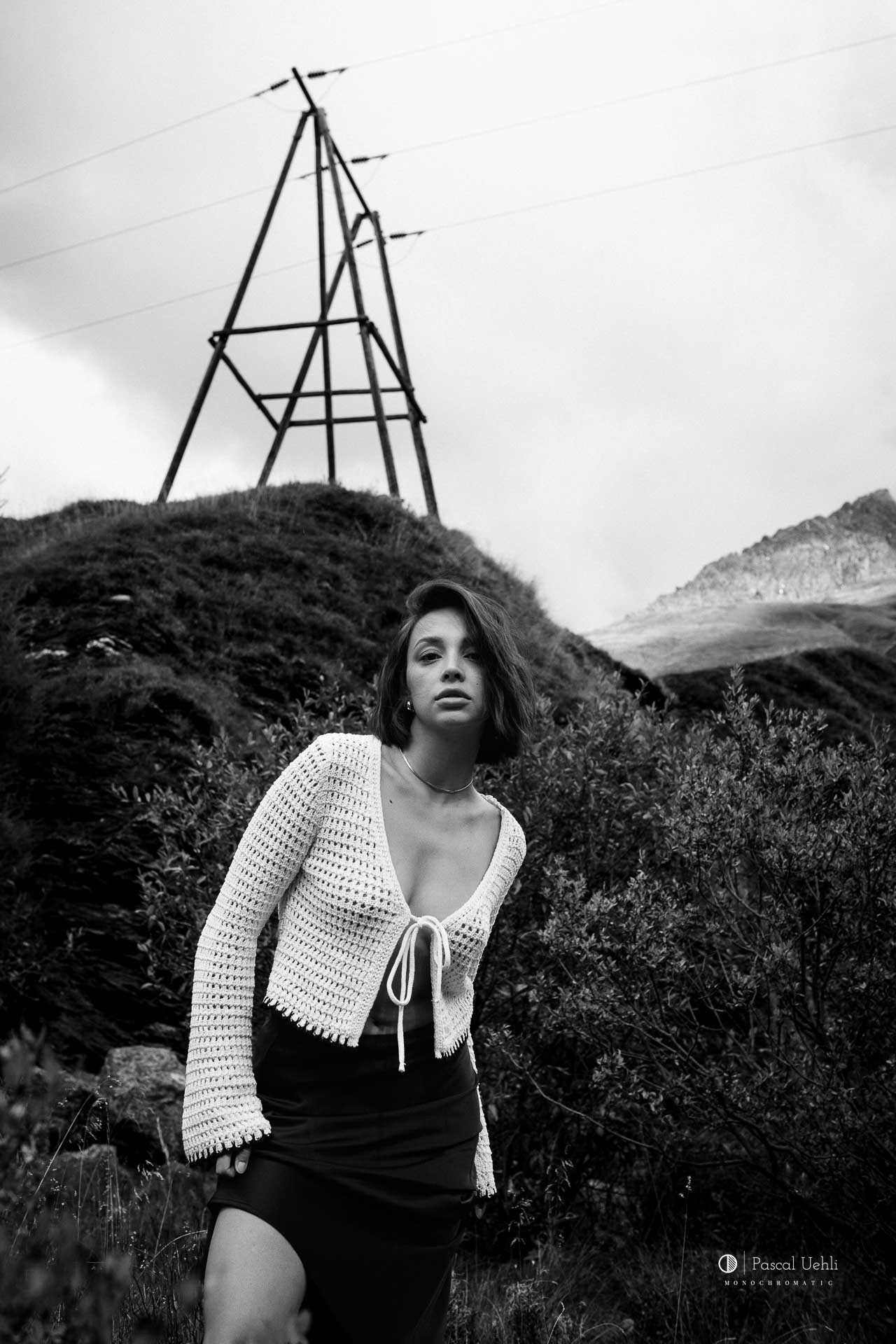
What I find powerful in Olivia’s presence is the way she moves between different emotional states without losing herself. There are moments that feel almost fragile, where the expression turns inward and the portrait becomes a private thought. Then there are gestures shaped by wind and space, where the body opens into the landscape and the image gains a cinematic energy.
This is where portrait photography becomes more than recognition. You are not only looking at a person. You are entering a state of attention. Her gaze does not explain everything. It leaves room. And I like that. A portrait should not close too quickly. It should allow you to stay with your own uncertainty.
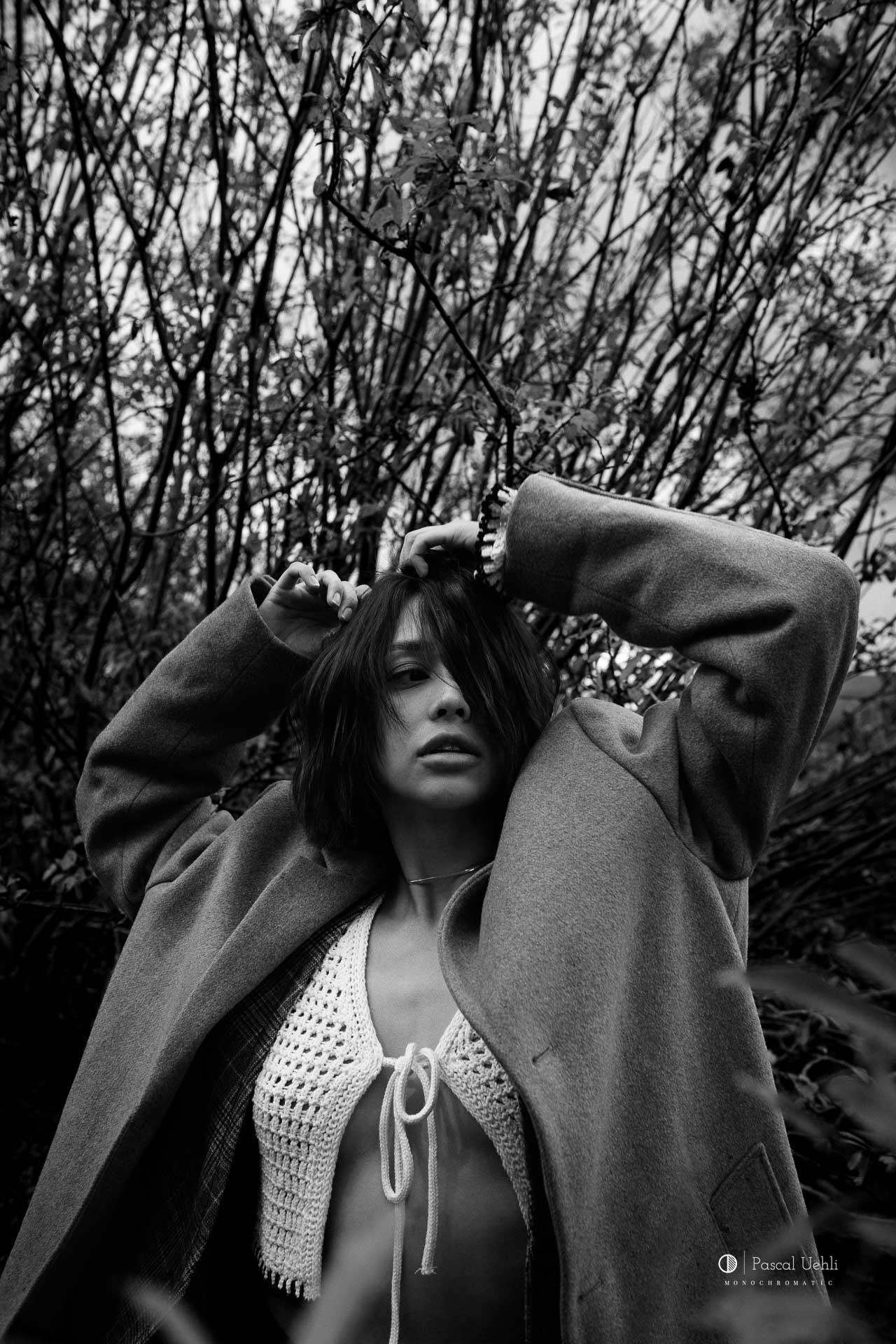
Black and white gives this editorial its structure. It removes the distraction of colour and lets texture, light and emotion become more precise. The rocks, the knitted fabric, the skin, the distant mountains, the wind in the hair — everything becomes part of the same visual language. Contrast is not only tonal here. It is emotional.
The composition often moves between closeness and openness. Sometimes the frame holds Olivia tightly, almost like a thought that cannot escape. At other times, the landscape expands around her and the portrait becomes part of something larger. This variety is important. It reflects what I try to explore in my work: portraiture as a space between control and surrender.
In Avers, with Olivia, the editorial became a study of presence. Nude fashion, mountain silence, movement, vulnerability and strength all met in a quiet but confident way. For me, this is where photography becomes meaningful — not when it tells you everything, but when it gives you enough to feel something true.
MEMBER EDITION
CONTINUE THE STORY
Discover an extended selection of photographs from this editorial, available exclusively in the Member Area.
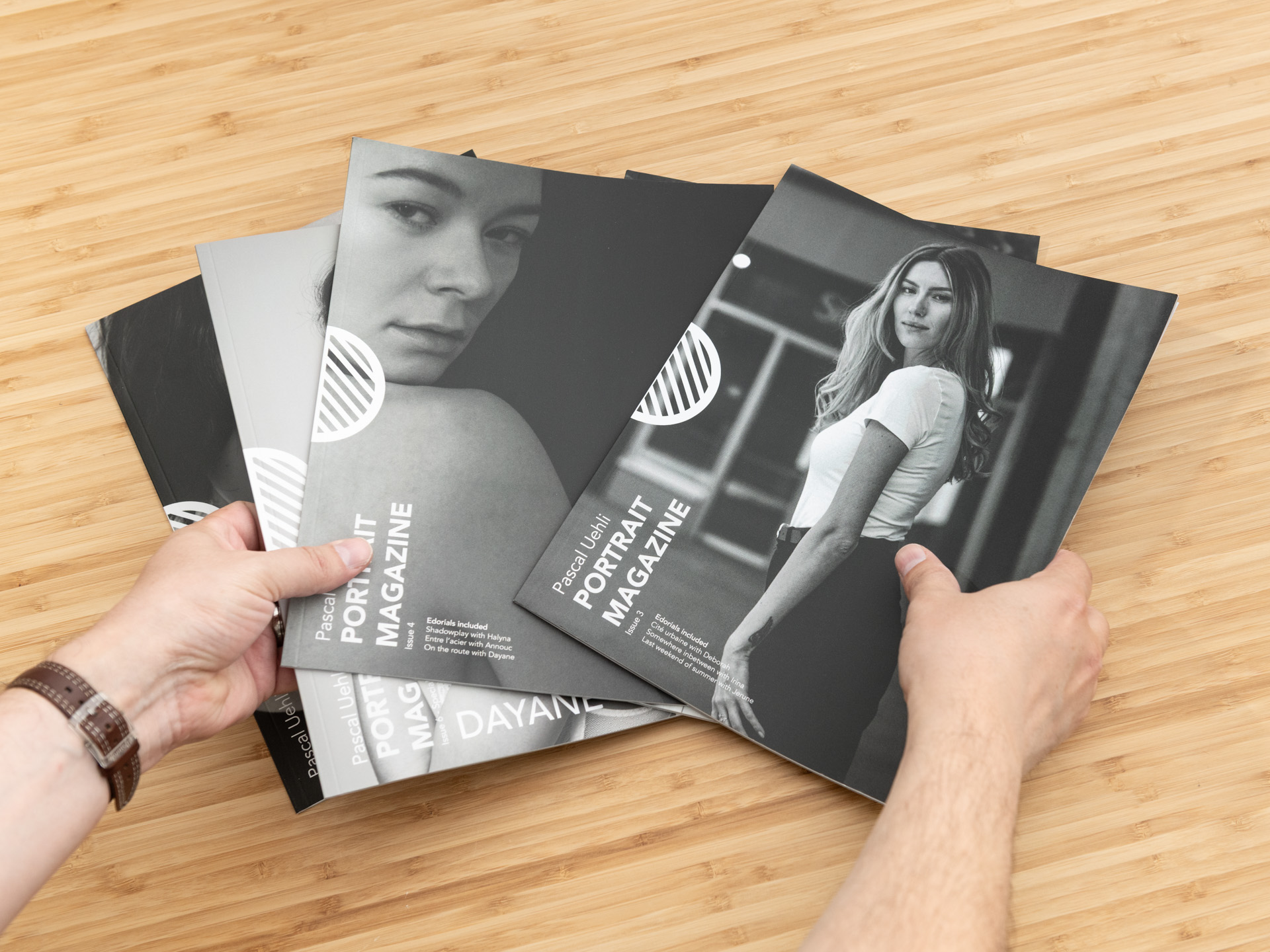
PORTRAIT MAGAZINE
FROM SCREEN
TO PRINT
My black and white portrait photography continues beyond the screen.
PORTRAIT MAGAZINE brings selected editorials together in a printed publication made for slower, more conscious viewing.
Discover the current issue and previous editions of my personal portrait magazine.
PHOTO ARCHIVE
CONTINUE EXPLORING
Discover more portrait editorials from my photographic archive.

