
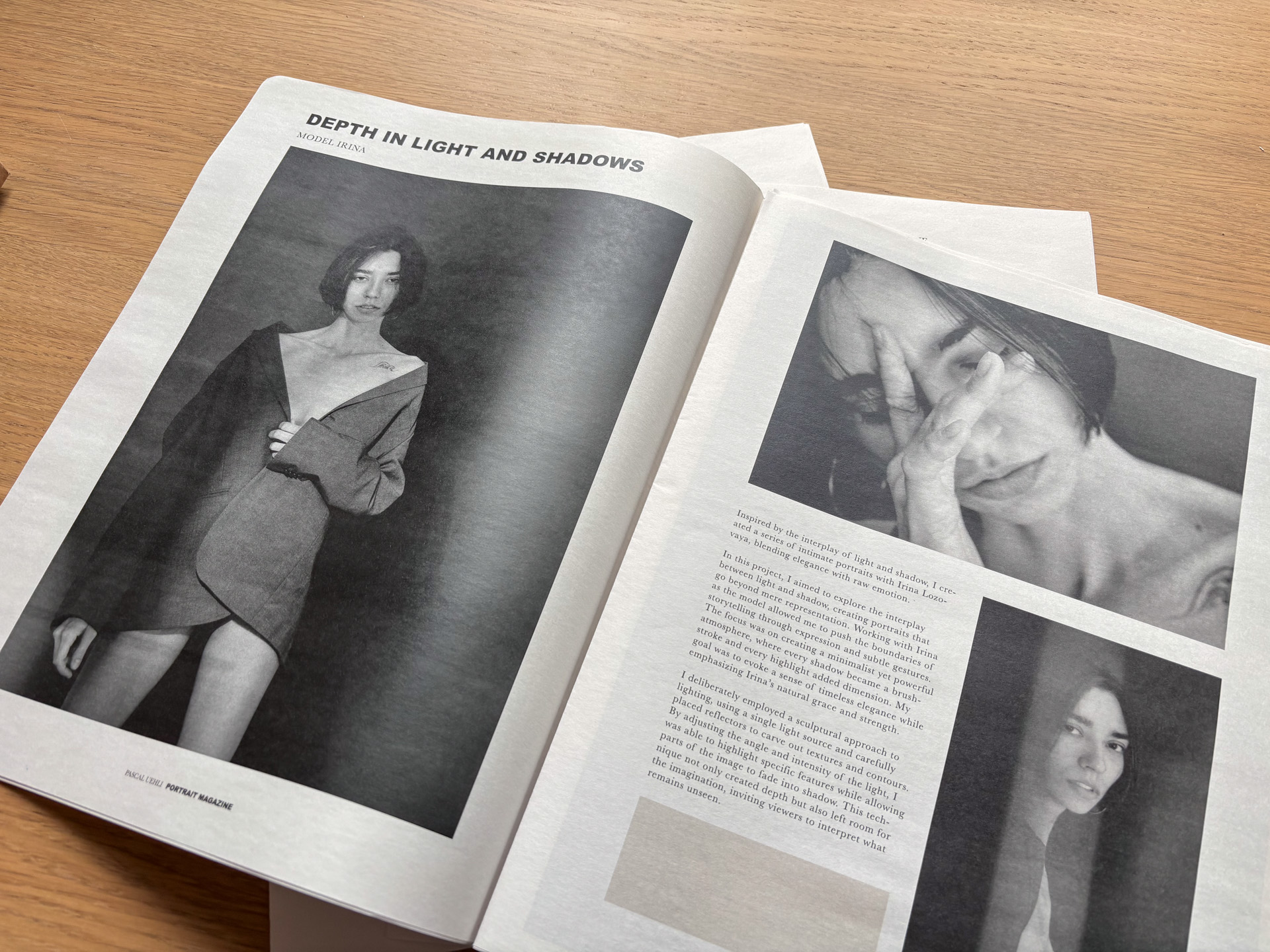
A printed magazine changes the way we look at photographs. Not because an image on paper is automatically better. But because the act of viewing shifts. You hold a page in your hands, pause at a double-page spread, see two images next to each other and begin to read connections that often pass by too quickly on a screen.
This is exactly why my PORTRAIT MAGAZINE has been created as a printed medium since the very first issue. My aim is not to show individual portraits as isolated as possible. I am interested in the connection between images: the rhythm of a series, the mood of an editorial, the relationship between light, space, person and expression.
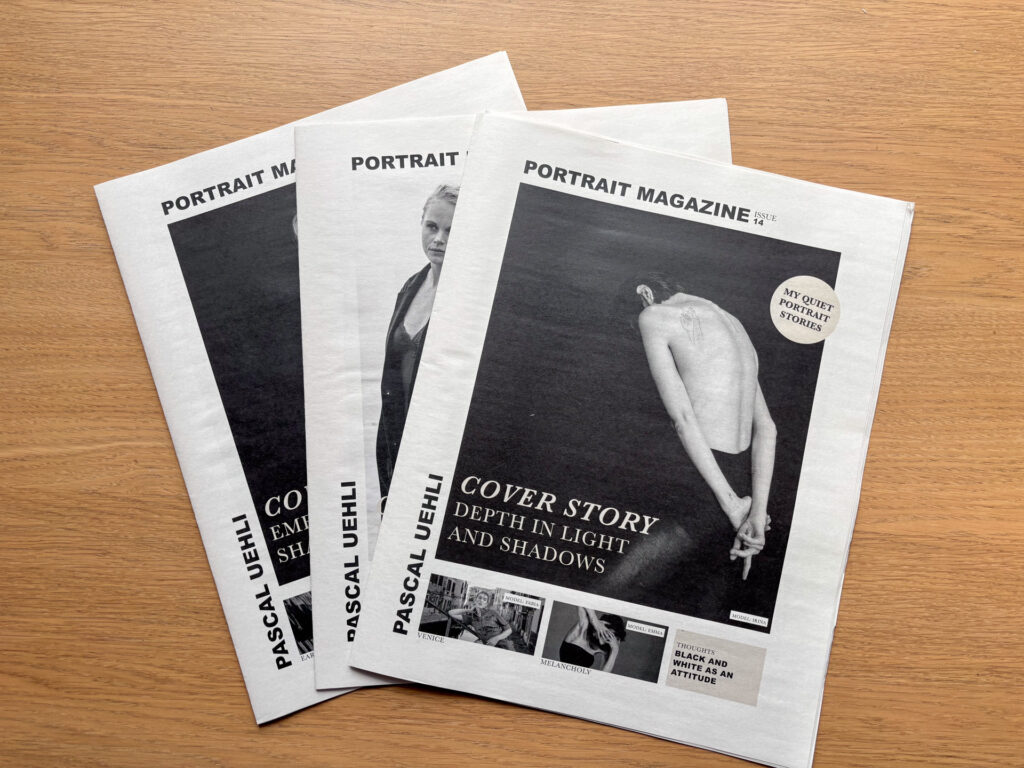
The 14th issue of my PORTRAIT MAGAZINE is expected to be published at the end of August or the beginning of September 2026. This issue also remains true to that idea. It brings together three different photographic stories and a personal text about black-and-white photography as an attitude.
Three Editorials, One Shared Photographic Question
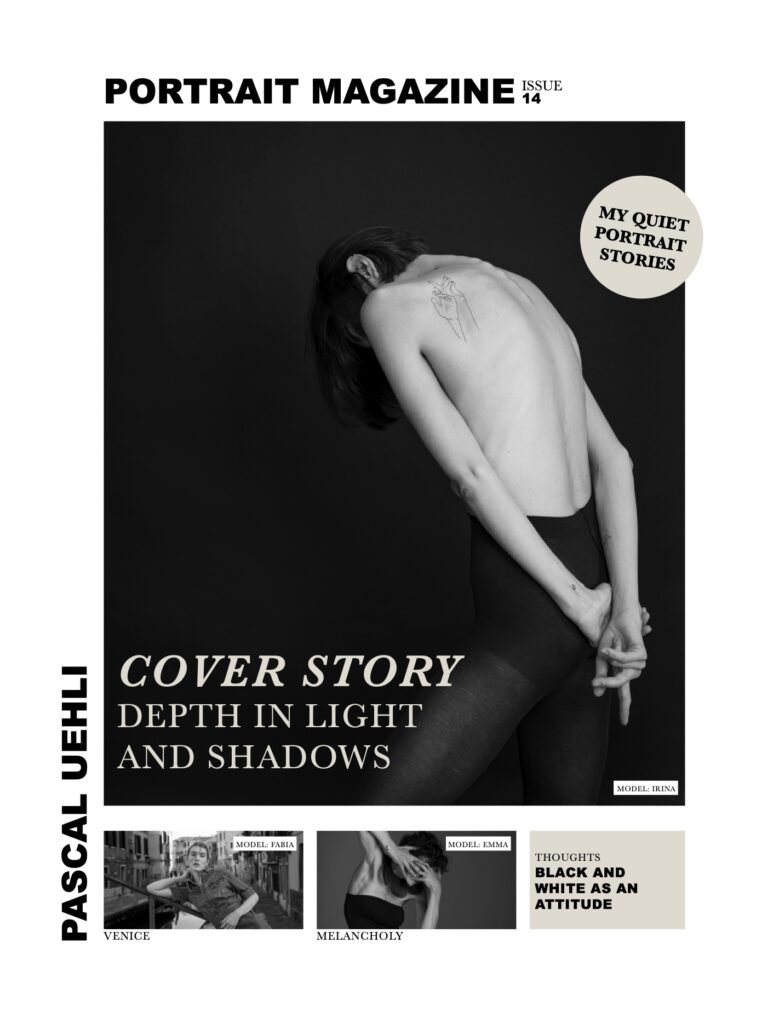
PORTRAIT MAGAZINE 14 brings together three series that may seem very different at first glance. “Depth in Light and Shadow” with Irina Lozovaya explores light and shadow. “Venice” with Fabia connects portrait photography with the atmosphere of Venice. “Melancholy” turns its attention to a quieter, more emotional mood, one that emerges less through staging than through small gestures and subtle nuances.
For me, what connects these works is the question of how a portrait can have an effect beyond simply depicting someone. A face, a posture, a space, a shadow or a certain distance can suggest a story without fully explaining it. It is precisely this openness that continues to interest me in portrait photography.
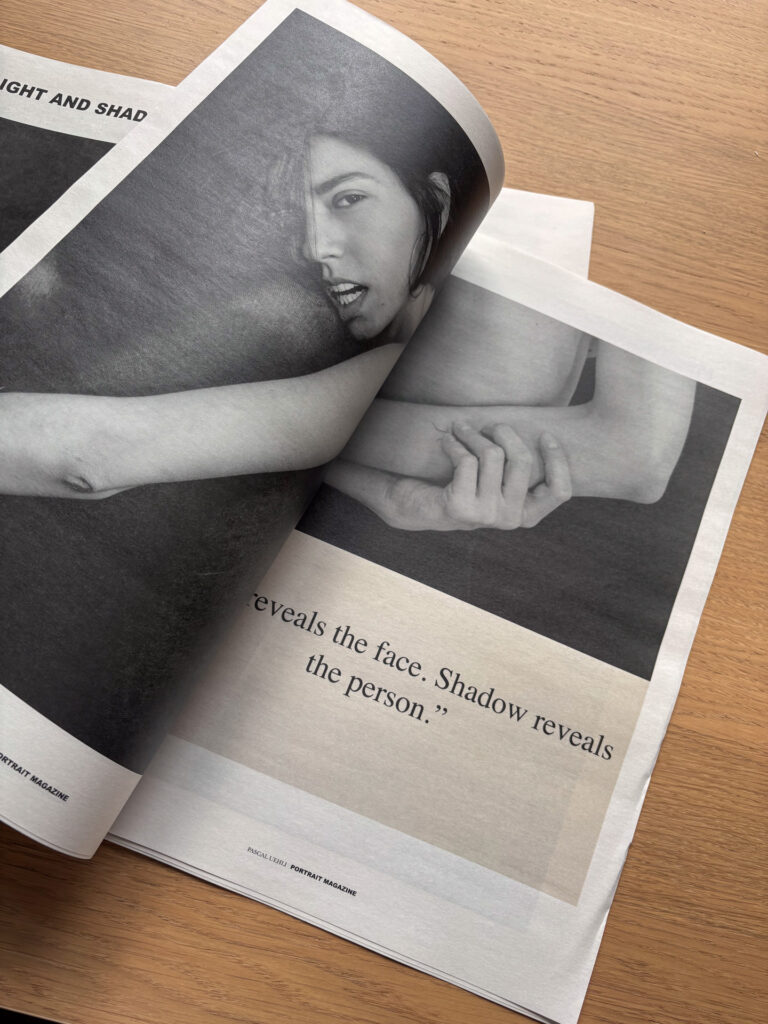
A good portrait does not have to show everything. Sometimes its effect emerges exactly where something is held back. In reduction, another form of presence can appear. It leaves more room for perception and for the viewers’ own interpretation.
Depth in Light and Shadow
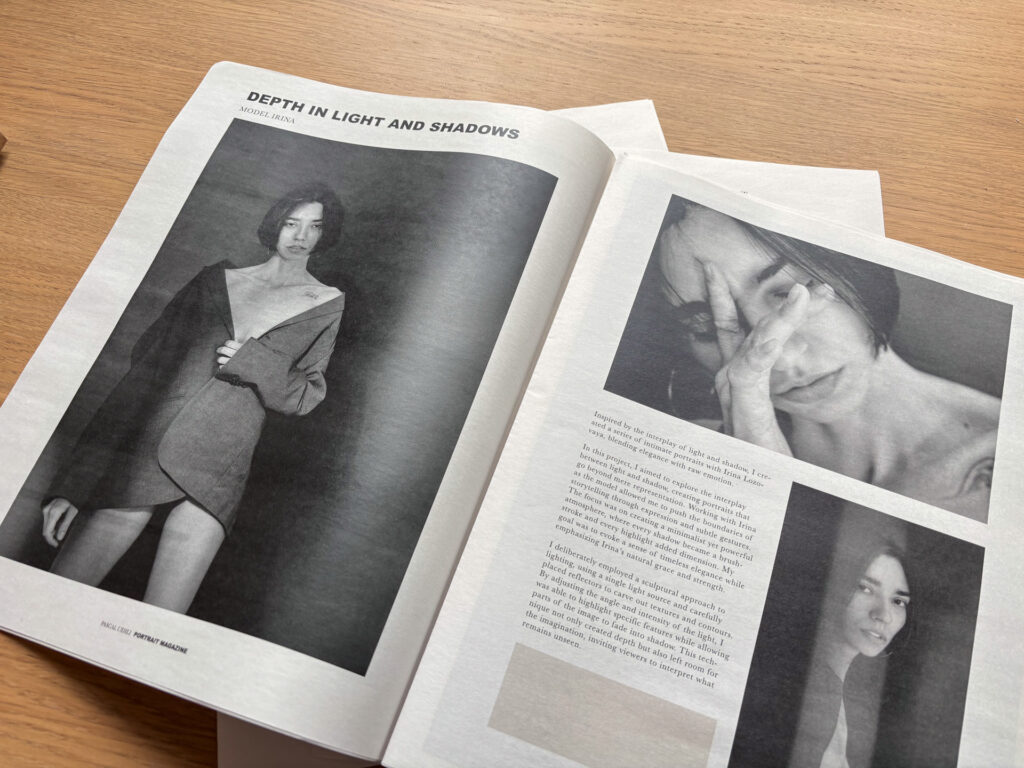
The series “Depth in Light and Shadow” with Irina Lozovaya deals with a subject that has accompanied me in my photographic work for a long time: the interplay of light and shadow. Light makes things visible, but it does not explain everything. Shadows can structure an image, create depth and open up areas that elude direct observation.
In black-and-white photography, this relationship becomes especially clear. Colour recedes, tonal values take on more responsibility. Transitions between light and dark become more important. Skin, fabrics, contours and forms gain a different presence. An image then lives not only from what is clearly recognisable, but also from what remains only suggested.
What interests me in this series is not the dramatic effect of contrast alone. More compelling to me is the question of how much an image needs to show and where it becomes stronger when it remains open. In this context, shadows are not simply dark areas. They can create calm, guide attention and give a portrait an inner tension.
“Depth in Light and Shadow” therefore also stands for a photographic attitude that has become increasingly important in my work. Not every detail has to be visible. Not every piece of information has to be answered in the image. A portrait is allowed to hold something back.
Venice as Part of the Portrait Story
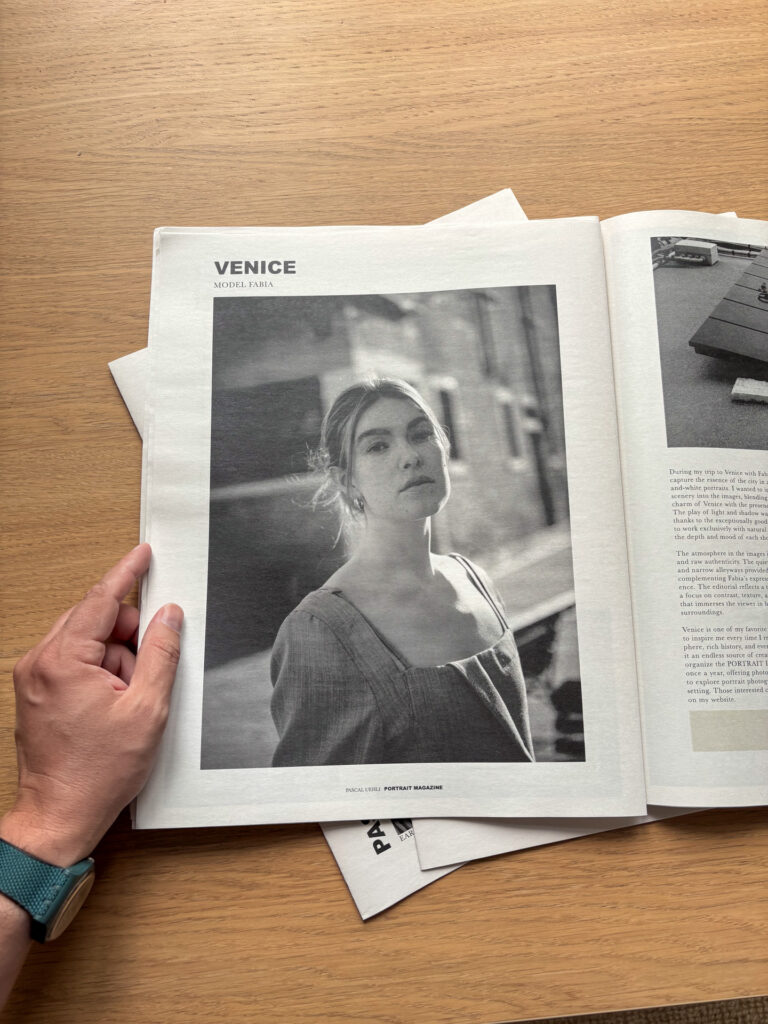
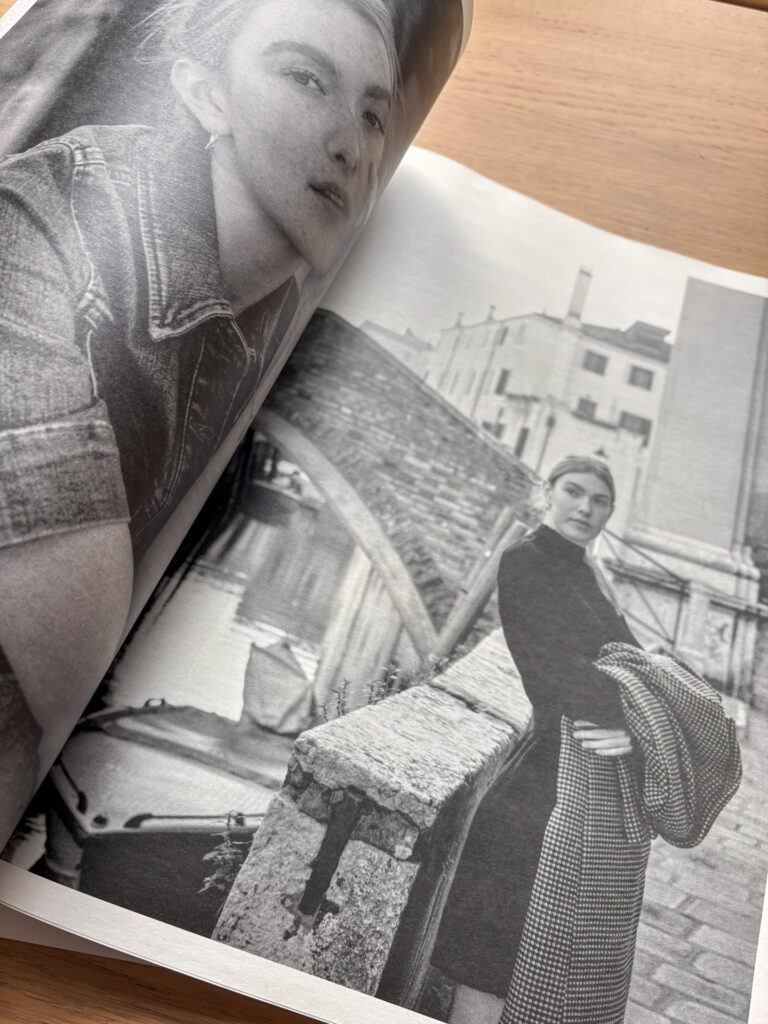
The editorial “Venice” with Fabia leads to Venice. Venice is a place that is very easily overlaid by its familiar photographic images. Many views are well known, many motifs already strongly defined. That is exactly why I am less interested there in the obvious sights than in the small spaces in between.
For portraits, narrow alleys, walls, doorways, reflections of light or inconspicuous corners can often be more interesting than grand backdrops. A place does not have to be spectacular to have a strong photographic effect. What matters is how it comes together with the person in front of the camera.
In this series, Venice does not become the actual subject. The city remains part of the story, but it does not push itself into the foreground. It gives the portrait space, structure, light and atmosphere. A wall can become a surface, an alley a line, an entrance a frame. These are the kinds of elements that interest me, because they can support a portrait without dominating it.
This way of photographing also shapes my PORTRAIT INTENSE CLASS in Venice. It is not about ticking off as many famous locations as possible. What interests me much more is how a coherent series of images can emerge from location, light, model and a photographic idea. A series needs more than individual strong images. It needs an inner connection.
Melancholy and the Meaning of In-Between Moments
With “Melancholy”, PORTRAIT MAGAZINE 14 becomes quieter and more emotional. Melancholy is a mood that is difficult to force photographically. As soon as it is staged too obviously, it quickly loses credibility.
For me, melancholy tends to emerge in small shifts: in a gaze that does not go directly to the camera, in a posture that has something restrained about it, in a distance that remains perceptible. Often it is the moments between two deliberate poses that give a portrait a particular depth.
Images like these require a different kind of attention during the shoot. It is less about controlling an expression precisely. More important is the space in which something can emerge. A model does not have to perform or present something constantly. Sometimes a small movement, a pause or a moment in which the camera is not felt as pressure is enough.
This series reminds me how important the collaboration between photographer and the person in front of the camera is. A strong portrait is not created by camera, light or location alone. It is created through trust, communication and the atmosphere during the act of photographing. The photographic responsibility also lies in shaping this space consciously.
Black and White as an Attitude
Alongside the three editorials, PORTRAIT MAGAZINE 14 once again includes a personal text. Under the title “Black and White as an Attitude”, I write about why black-and-white photography is far more to me than a decision made in post-processing.
For me, black and white does not begin at the computer. It begins before the shutter is released. It influences how I see light, which locations interest me, which clothing suits a series and how I compose a portrait. When colour falls away as a narrative element, other things come more strongly to the fore: facial expression, forms, skin, structures, contrasts, tonal values and body language.
This reduction is not neutral. It changes the way I photograph. I search for light differently. I perceive surfaces more consciously. I pay closer attention to the relationship between light and dark areas. Clothing, background and surroundings are also judged differently, because they no longer work through colour, but through brightness, structure and form.
For me, black and white is therefore less a look than an attitude. It is a decision about what should matter in the image and what should not. This decision can be strict, but it can also feel liberating. It repeatedly forces me to question an image: What does it really need? What is distracting? What can be left out?
Why Print Remains Important to Me
Today, many photographs are seen primarily on displays. That is not fundamentally wrong. I also show my work online, and digital platforms are an important part of making images accessible. Still, I experience print as a different kind of encounter with photography.
A magazine has a fixed sequence. One page follows the next. A double-page spread remains in place. Two images are deliberately positioned beside each other and influence one another. The order of a series becomes more tangible as a result. Pauses, shifts and contrasts within a sequence of images also gain more weight.
For me, this is an essential part of PORTRAIT MAGAZINE. Each issue documents not only individual works, but also a phase in my photographic development. Themes, visual language, people, places and personal thoughts come together. Looking back, this creates a kind of ongoing archive of my portrait photography.
Black-and-white photography in particular has a special presence in print. Tonal values, contrasts and subtle transitions can be viewed differently than on a glowing display. You see not only the individual image, but also its relationship to the paper, to the page and to the series.
Pre-Order PORTRAIT MAGAZINE 14
PORTRAIT MAGAZINE 14 is expected to be shipped at the end of August or the beginning of September 2026. As with the previous issues, the magazine will be published only in a small, limited edition. Some copies can already be reserved or pre-ordered before publication.
At the moment, a small number of free copies is also still available. The discount code freemag can be used for the order as long as the corresponding allocation is available.
Anyone who does not want to view my portrait photography only on a screen will find three different photographic stories in issue 14: light and shadow with Irina Lozovaya, Venice with Fabia and a quiet exploration of melancholy. In addition, there is a personal text about black-and-white photography as an attitude.
For me, this issue is another step in my engagement with portrait photography, reduction and printed visual language. Perhaps this is exactly where the value of a magazine lies: it holds a moment without closing it definitively. The images remain, but the way we look at them changes with every viewing.